
by Francesc Miralles - Art Critic and Historian
Introduction to the book "Sunrise, H214"
Editorial Mediterrània, 2004
INTRODUCTION
I think the first thing I should say is that in this study I am not exactly dealing with a painter, in the usual sense of the word, rather with a complex – highly complex – character who, according to someone who acted as his dealer for a certain time, was the most spectacular, shocking and singular person among all his acquaintances. How is Josep Puigmartí shocking, singular and spectacular? In a nutshell: in every way.
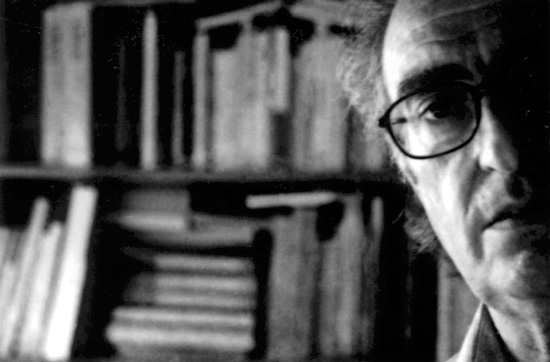
Not many people could claim that on their first trip to Sweden in 1957, they slept in thirty different places during the first month, from a hayloft to a five-star hotel, each night properly accompanied. Not many people could claim that while being sought out by famous international brand names to decorate their window displays, they were obliged to create dozens and dozens of lithographs with clearly commercial subjects and prices, signed under different pseudonyms, just to subsist.
Nor could many people claim that they lived in Cadaqués during innumerable summers in the shadow of the gods, and that they were models in photographs taken by the Catalan cultural elite. There were not many artists like Puigmartí who in those years wandered around Europe, holding show after show after show, and who like him were one day left without a past, without a written memory, because an impassioned woman caused his suitcase to vanish without a trace, and this contained all his documents. There are not many people who, when favourable winds are blowing, prefer to just live one day at a time, even if painting is their invincible passion.
I must confess that until now, I have never dealt with a more intrepid artist, an erratic cultural wanderer who was expelled from Sweden and the United States due to his long-expired tourist’s residence permits.
He, who in both countries had held multiple exhibits and activities and had appeared in multiple publications, at times illustrating them and at times featured in them.
I must confess that, as a historian, I never thought I would have to write the biography of a personage who had no past except for that which remained in his memory.